Friday, September 27, 2013

I Am Not an Imposter
By Liz Selvig


The definition of being a “real” writer at its most basic is simple—when you write and that’s what you want to do, you’re a real writer. In our profession we’re always looking for the satisfaction of publication, it’s true, but deep down we know that if writing is at our core we’ll put pen to paper or fingers to keyboard whether we are published or not.

So, I here stipulate that all of us reading this blog, with exceptions for our friends and non-writer fans, are writers. My question is: what makes us feel like real writers?  

Some of you have felt “real” from the moment you wrote your first word and that’s as it should be. Me? I still feel like an imposter most days. I love to write—or, more accurately, I love to have written, because the actual writing is hard. But writing a book in my case definitely takes a village—and some days I feel like I’m just an actor in front of other people watching me play a part. After my first book came out I thought I’d feel cool. Like I was walking with giants. Hah! I felt like I’d won a special backstage pass to watch the cool writers be cool. I visited. I smiled. I shook a few hands. Got a few autographs. Then I was just me again. Not a cool kid.

I know its poppycock. We’re each on our own journey. We’re each cool. I had a list of goals similar to that of my writer friends and I’d met them:

1. Finish a manuscript
2. Enter a contest
3. Win a contest
4. Send out queries
5. Get an agent
6. Sell a book.

Any one of those steps defines a real writer—even in the commercial sense. So why did I still feel like I was pulling one over on the writing universe?

I rode the wave of fun that accompanied the release of my first book and I even signed a handful of them. I got some nice reviews and compliments from friends and family. It was all great. And then the wave broke as waves do, and I had to go back to grindstone—as writers should have to do. And there I stalled.

Several writer friends published second and even third books. Numbers for them soared and promo for them continued. At RWA and RT they had piles of several different books. I was promo-ing the same thing. And I was, like, waiting for the book fairy to come down and give me another book (preferably without any help from me). Barring that, I needed at least a kick in the shorts and a lecture to get the dang book done.

But I was a fluke. A one-hit wonder. I was competing even with my own good reviews. 

Finally, finally I wrote and revised and slogged my way through a second book. I turned it in and waited for my agent and editor to come back with a gently worded Dear John letter. “Yup—you wrote a lovely book—now go back to your day job.” 

Of course that didn’t happen. I have a lovely new book, “Rescued by a Stranger” coming out in three days. And I admit, once that second book had been accepted, I honestly felt like real writer. I would be multi-published. Legitimate. Not an imposter.

But even as I basked in that feeling the little noggins in my brain started. Other real writers had more friends on FB, they were debuting at #3, #2 even #1 over at Amazon. They had fans, they had street teams, they had their acts together, and I didn’t know what the heck I was doing promotion-wise. They, they, they …

...and it smacked me upside the head. I was and have always been measuring being a “real writer” with the yardstick of comparison. I saw what I perceived as “real” and believed if I hadn’t done the same things, I wasn’t yet legit.
 

It’s a crock. Which, of course, most of you know. This is the secret: we simply ARE real writers. We don’t have to try. There will always be someone doing something different, having more or less success, reaching a goal we’ve set before we do. It doesn’t matter. Comparison is the kiss of death. Comparison shuts writers down. Don’t compare yourself to anyone. Liz.

Young Liz - working on her writing


What’s it mean to feel like a real writer? I’ve discovered exactly what it is—believing that you have a story to tell and loving that story whether one person reads it or 100,000 people read it (one of my goals, mind you, despite my advice). It’s being able to say just to yourself: Hi, I’m (insert your name here) and I am a real writer!

So 'write on' my real writer friends—you each have an incredible gift. Don’t waste time analyzing it—I already (over)did that for you. 


Friday, September 20, 2013

Alaskan Apocalypse

-->
As a post-apocalyptic fiction writer, I’m all too aware that Alaska may not be the ideal place to live if the world goes belly up. We ship in over 95% of our food. Our growing season is a meager 101 days here in the Anchorage Bowl, and even shorter further north. Then there is the issue of ripening fruit in summer temperatures that may never go above sixty-eight. But in spite of the challenges, I manage to supplement my family’s food supply with hundreds of pounds of potatoes, gallons of pickling cucumbers (in a greenhouse,) and lots of everything in-between.
Right now I’m picking apples. I have 23 fruit trees on my half-acre lot, and last year I harvested enough to make 10 quarts of pie filling and 15 gallons of cider, not to mention what we ate out of hand. Alaskans must grow what are generally considered “summer” apples; if they ripen in August down south, they ripen in September up here. And by mid-September, we usually have a killing frost. No Fuji for us. We grow a lot of Yellow Transparent, Rescue Crab, Parkland, and Norland. (My favorite is Parkland.) The apples aren’t huge, and they don’t store well, but they survive and ripen in our unique conditions. And I make a mean, hard cider to help us keep warm on those frigid winter nights. ;)
Hardiness zones are only one step on a long path of survival for plants in Alaska, because zone 3 in Minnesota is very different from a zone 3 up here. For one thing, our long hours of daylight fool a lot of trees; they swell flower buds in early May before the last hard frost, or they don’t shed leaves in September when snow is just around the corner. Secondly, our winters are capricious. In the middle of January, a Chinook wind often carries in a few days of forty or fifty degree temperatures, fooling trees into thinking spring has arrived. They happily start sap flowing to the branches, only to freeze and rupture when temperatures plummet below zero when the wind shifts. Growers up here call this a “test winter,” and every new plant variety is on trial until it has survived one of these. I’ve lost more trees than I’ve planted.
This is not a comprehensive list of the challenges we face. So why do I keep trying to garden under such extreme conditions? I think I like the challenge. If I can coax enough plants to survive and feed me, I feel like I can make it if disaster hits. I guess you could say Alaskans themselves are on trial, and only the hard-core people stick it out. But you know, I think we may survive the zombie apocalypse. I hear zombies don’t move well in the cold.
--
Tam Linsey writes speculative romance as well as gluten free cookbooks. You can learn more about her at www.tamlinsey.com

Friday, September 13, 2013

Autumn in Alaska


The fireweed has gone to seed. The weather has turned rainy.  A chill has replaced the warmth of the sun. Red and yellow are creeping into the green foliage. Summer’s over, and it’s fall in Alaska.

The salmon fishing is down to the last of the silvers, and the berries are all picked. Kids are back in school, and the State Fair has finished displaying giant vegetables. But it’s not all bad news. My old friends the ravens are back in town. I can dig out my favorite sweaters and fleece vests. And it’s writing season.

Now, I know writers should write all year long, and I do. But I find it easier to write this time of year. In the summer, the sunlight beckons me outdoors and there’s so much to do that can’t be done at other times. Those excuses go away in the fall, and friends and family stop inviting me to barbecues or outdoor activities. It’s okay to sit with a cup of tea and stare out at the rain while I think of the next book plot, or hammer out a scene on the laptop. We Alaskans allow ourselves to hibernate a bit in fall and winter. So it’s the perfect time of year to write.
 
What about you? Do you find it easier to write at certain times of the year?

Lynn Lovegreen writes young adult historical romance. Her first Gold Rush book will be published with Prism Book Group this December. See her at Facebook, Tumblr, or www.lynnlovegreen.com.


Friday, September 6, 2013

Real Men of Alaska
 
Mr. September 2013
 
"Brandon"


As Romance Writers we're always on the lookout for Hot Hunky Hero Types. So, this month we're going to hear what BRANDON is all about:

Here are some questions that we asked Brandon, and his answers follow, so sit back and get to know him.
(Brandon, remember we are a PG 13 site and blush easily).


What kind of woman appeals to you, and who do you let make the first move, you or her?

   Fun loving, nerdy, a good sense of humor - the kind that can put up with my ...bad puns, either way.

Where is your favorite place to take a girl on a first date, and why?

   Why, the mall of course! We can get to know each other better - and I can find out what kind of stuff she likes.  

What's the wildest thing you've ever done, other than...well, you know...with a female companion since living in Alaska?

   Hmmm...I punched a moose once - he snuck up on me. (True story!)
 
Winter can be long, dark...and very cold here in Alaska. What are your favorite frosty pastime activities (not counting the obvious, of course - remember the PG 13 rating) ...and, what is the coldest temp you’ve seen/been in?  

     During the dark, cold parts of the year I like to curl up and watch TV shows I missed during the summer - enjoying some tea and spending time with my loved ones.

And, if we ask about winter then we simply must inquire about the too short, wonderful summers. What are your favorite things to do during all those long hours of sunshine?
 
   I really enjoying the sunlight, spending time outside.
 
Alaskan men take their vehicles very seriously. What is your favorite mode of transportation – car, truck, snow machine, four-wheeler, airplane, skis, snowboard, etc...and why?

   Ah...a blimp? Yes, that would be fine with me. Why, you ask? Because it would just be awesome.

What is your favorite Alaskan animal – to see along the highway or on your dinner plate?

   Along the highway...birds - any kind of bird. On my plate - no, thank you.

Have you ever wrestled a polar bear, mushed a dog team, panned for gold, eaten muktuk, done the polar bear plunge, climbed Denali, run the Mt. Marathon, or any of the other, found only in Alaska, activities?  

   Eaten muktuk...I have done that - not something I would like to try again - and I have ran outside in knee deep snow, in my boxers.  

In your opinion, what exactly is it that makes an Alaskan Male so wonderfully macho and appealing?

   It might be the cold. It might be that we all drive moose to work. Who knows? My guess is the chest hair!

Other than making love under them, what is your favorite thing to do when the Northern Lights are out and putting on a show?

     Get photos of them! (Sometimes I just sit there and watch)

And last, but certainly not least:
In your opinion, what is the most romantic thing about Alaska, and why?  

   The sunsets, and the mountains. I love it when it the sun is setting and the sky is blooming with reds and pinks. It's very relaxing. (Or moose poop...cauz it’s all natural.)


 Our Thanks to Brandon for this candid interview!
 
On the first Friday of each month we'll have a new Alaska Man for you - watch for Mr. October!
 
See you next time...


Friday, August 30, 2013

Seeking: Willing Workers on Alaskan Farms

It’s a sad day here at our homestead in Homer, Alaska -- we just said goodbye to our Woofer. Nope, not our dog or a component of our speaker system. Our woofer is named Julia and she came here from Oregon. She’s a “willing worker on organic farms,” affectionately known as a “woofer.” Have you heard of this program? It’s very popular in Homer, and also where we spend the winters in Hawaii.

Woofers (technically, WWOOFers) are usually young, college age or early twenties. Host farms post their information on one of several official websites, so potential “woofers” can make contact and the two parties can mutually decide if it’s a good fit. The arrangement is simple: labor, usually twenty hours a week or so, in exchange for room and board. The particulars of the situation depend on what the host farm needs, and what the worker is interested in doing or learning. Many woofers want to learn organic farming techniques or other skills connected to a sustainable lifestyle. Some just want a way to travel to new places without spending lots of money. For Julia, the appeal was that she could come to Alaska and really experience what life is like here, instead of zipping through with a backpack.

We don’t have a farm, but we have plenty of building going on. Julia learned things like how to denail boards, how to run a cordless drill, how to start a fire in a woodstove. She went blueberry picking with us and took a kayak trip across Kachemak Bay. She loved every minute of her two-week stay, even the times she stood out in the rain handing tools to my husband while he put a roof on our new shed.
Blueberry Picking

The benefits for us? I got the fun of having a new Oberlin grad and future med student hanging out in our ramshackle homestead. My husband got an overly educated carpenter’s assistant. My little daughter got someone new to chatter to. Anyone who lives on a homestead knows there’s always work to do, always a need for more help. Ideally, we’d have five strong kids to help us out. Instead, we go for Woofers.

Right now, I’d give the Woofer program ten thumbs up. But not all woofers are created equal. Some have a work ethic that, let’s just say, isn’t in line with what Alaska demands. There’s always the question of compatibility. The woofer has to be someone you don’t mind having at your dinner table most nights. It’s really important to talk thoroughly beforehand about what they’ll be doing and what everyone’s expectations are. Even so, things don’t always work out well. But the beauty of it is that it’s a temporary situation. Woofers rarely stay longer than a few months. If you want to keep in touch after they’re gone, you can; I certainly hope we do with Julia.

If you’re interested in the concept, either as a host farm or a worker, there are several websites here in the U.S. and internationally. Based on my experience so far, it’s a wonderful way to meet enthusiastic young people and pass on Alaska-bred skills to those who want to learn them. 

Jennifer Bernard's next release is HOW TO TAME A WILD FIREMAN, out on September 24. Read more at JenniferBernard.net.

Friday, August 23, 2013

Why are readers drawn to historical works?

Many reasons exist for why readers are hopelessly attracted to historical fiction. Getting back to the basics—our roots—seems to be the most common.

What inspired our ancestors to emigrate or how did family traditions begin? Where did I get brown eyes and curly hair? Why did my great grandmother celebrate Celtic holidays or speak French fluently?

These are questions my friends have asked. With a little research, they found answers. But who wants the journey to end there?

Hundreds of history books exist. Wonderful resources we can use to piece together the places and people we’re intimately connected to.

As a person with a restless mind, I always craved more than straight facts. I wanted to see the events through the lens of the people who experienced history first-hand. Historical fiction provides endless opportunities for readers to live in those fantastical moments. Is there anything more exciting?

Pick a century or culture. Follow the events of a birth of a nation or religion. Taste the foods and wear the costumes. Fight the wars or dream their dreams.
I ‘m never satisfied with a linear link. The possibilities in historical works are endless. After all, is historical fiction really that far from the truth?

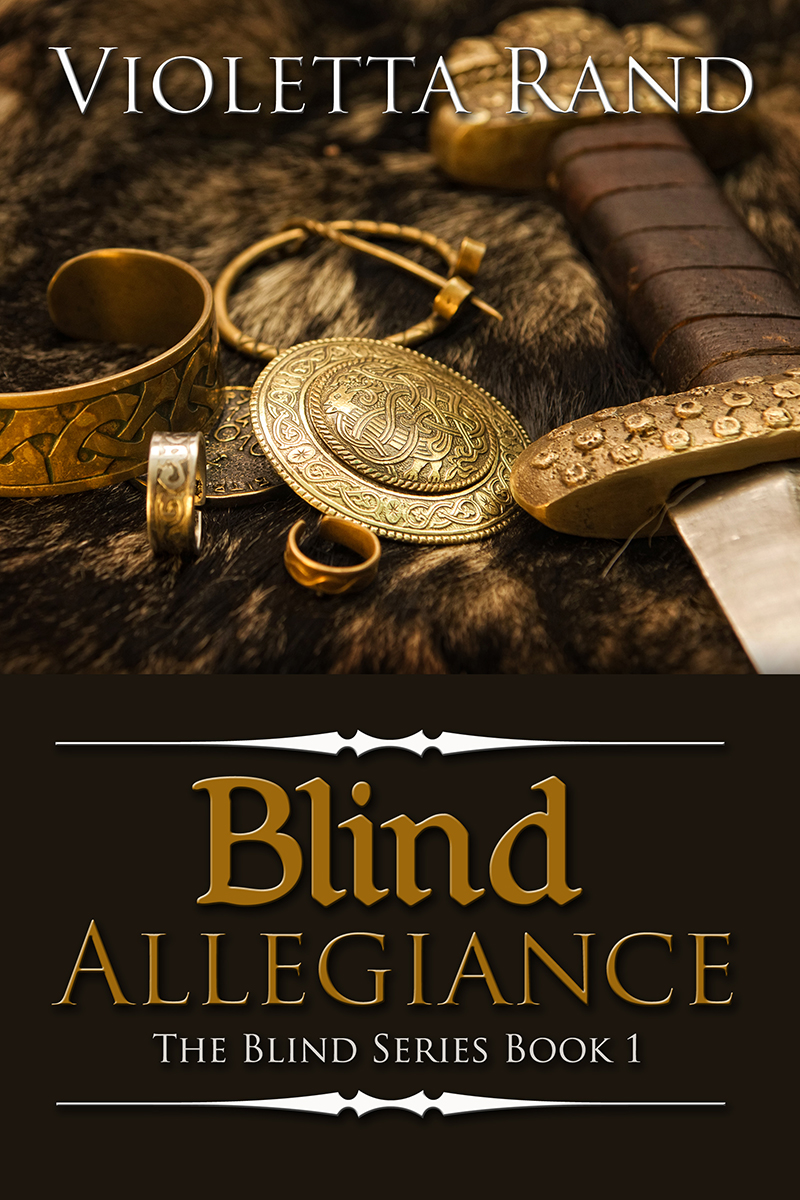
I think technology and modern thinking has stripped us of some of the values we miss most. In historicals, we’re able to catch glimpses. I’m not saying modern-day heroes don’t exist. But there’s something extraordinary about an 11th century Viking avenging the death of his kinsman or presiding over criminal/civil cases in his court.

It’s a mixed up world out there. I prefer the clarity of the past. Call me a dreamer, but I know I’m not alone. That’s what inspired me to read, and now write, historical fiction. There’s magic on those pages, and valuable lessons to be learned.

Those who cannot remember the past are condemned to repeat it… George Santayana.

Visit Violetta Rand on Facebook: 

https://www.facebook.com/violetta.rand


Friday, August 16, 2013

Alaska and summer

I don't know if you can find a better combination of words.  We've got sun, sun sun.  Hours and hours of it.  And outdoor sports.  Boating.  Fishing.  Camping.  Biking.  Hiking.  Everybody is outdoors, enjoying the lengthy summer days. 

And then there's me.  I do get outdoors at least three times a day.  When I walk my dog.  Go to the store.  Water the blackberries.  The rest of the time, I'm holed up.  Putting words into play.  Researching all sorts of cool/interesting stuff.  Playing piano.  And doing handcrafts.  You name it.  I like doing it.  Okay.  That's not entirely accurate.  I'm not much of a knitter.  And I might as well just confess it. 

I'm a counted cross stitch addict.  

Hi!  Jackie Ivie here, blogging about - of all things - cross stitch.  Why?  Because it's incredibly fun.  Yes.  I do cross stitch.  I admit it.  I've usually got eight to ten projects going - which is why I finish so many.  I have so many options on what to work on, I'm never bored.  It's a perfect craft for long, dark, cold Alaska winters.  


And it's a great accompaniment while I'm watching a DVD/researching the latest thing in jet aircraft.  Or what an updated WWII Diesel truck would sound like.  Or the night Alexander the Great razed Persepholis.  Or looking over the Temple of the Jaguar in Tikal (city of the Mayan empire.)  Or learning about the Forbidden City.  Angkor Wat.  The theory of special relativity. 

What can I say?  I do all kinds of weird/cool research, because you just never know when you might need this sort of knowledge for your vampire.  Or maybe your historical.  Or maybe just to confound your kids.  Or maybe I really am the nerd my kids call me.

Then again...it could just be because it disguises my cross stitch addiction. 

 
And just last weekend, I got to start someone else on this addiction.  The art gallery in Palmer Alaska took part in the summer art walk (really cool idea, huh?). 
 
They asked me to partner up with 9-year-old Sammantha (you read that right.  She's Nine Years Old.  She's amazingly talented.  Already.)  Sammantha designs and constructs jewelry pieces, and I have to tell you, she's good.  And Sammantha brought something extra:  she has a little sister named Megan who is also extremely creative.  I spent some time with Megan, showing her the art of cross stitch, and assisting her with needles, and thread, and counting. 

(Yes.  That's us on the floor in this picture!) 

I had a ball!  Thank goodness we had people there with cameras - since I am never prepared - and we got some great photos. 


One is Sammantha, me, and the gallery owner, JoAnn. 


Another is of me and Audrey, a lovely woman who came by and let me tell her all about cross stitch. 
 
It's not just the pattern, you see. 
 
It's the material. 
And the weave. 
And the thread manufacturer. 
And the thread count. 
It's the beading. 
It's the metallic accents. 
It's the storage systems and pattern conversion,
and...
 
Oh dear.  There I go again.

**************
   

 --- Jackie Ivie